

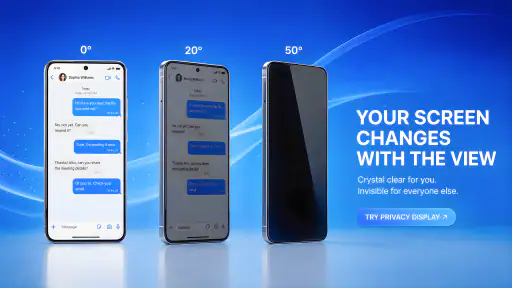
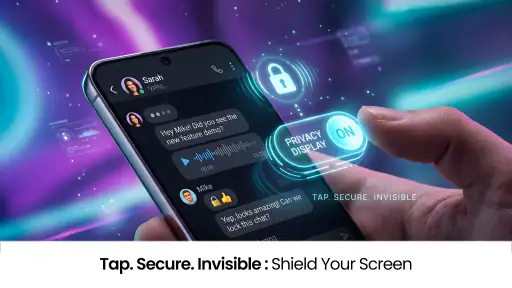
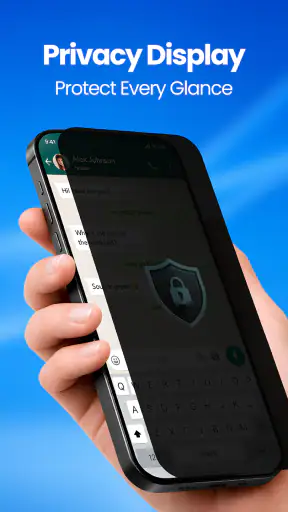
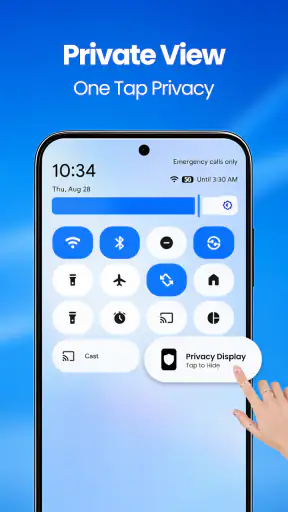
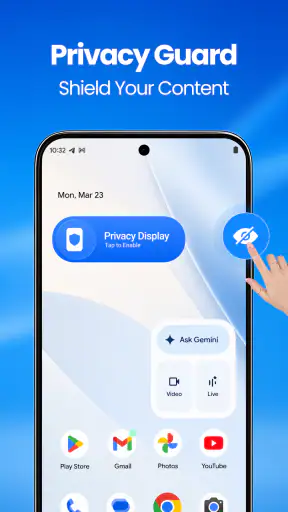
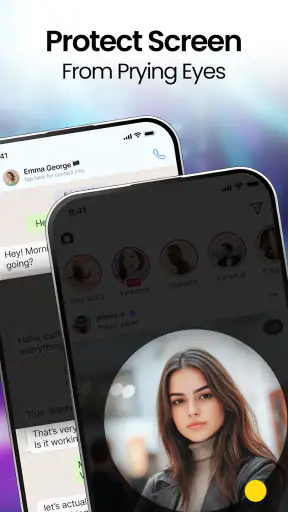
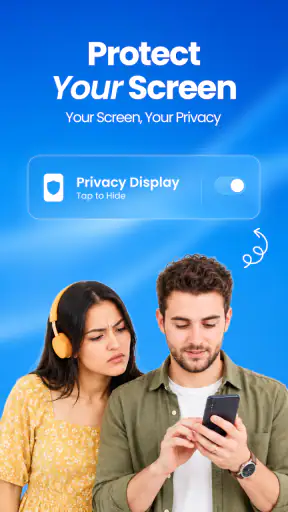
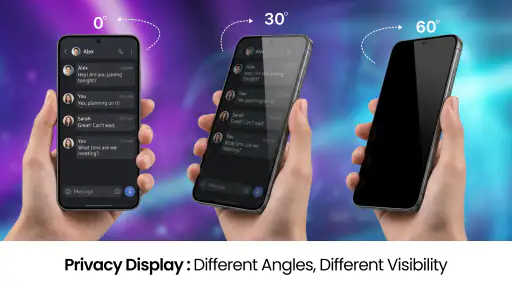
When someone sits beside me on a train, in a waiting room, or at a busy café, I do not always want my phone display to become public. That is the problem Screen Guard - Privacy Display tries to solve: it is a personalization app built around a privacy filter that makes the screen harder for people nearby to read. I found the idea useful because it addresses an ordinary moment rather than asking me to change how I use every app on my phone.
My first impression was that this is a practical layer of protection, not a replacement for a secure lock screen or careful phone habits. It is aimed at visual privacy, so it can help when the risk is a curious glance over your shoulder. It cannot stop someone from accessing an unlocked phone, and it should not be treated as a complete privacy solution. That distinction is important before installing it.
How I judged the app for everyday privacy
I looked at the app through a simple question: does it make public phone use more comfortable without creating so much friction that I switch it off? A useful screen filter needs to be easy to activate, unobtrusive during normal use, and predictable when I am reading messages, checking a map, entering information, or watching something. If the display becomes unpleasant to use, privacy protection quickly turns into an annoyance.
The app comes from Tech Brain Apps and sits in the personalization category. It is free to install, with optional in-app purchases ranging from $3.49 to $49.99 per item. That makes it easy to try before deciding whether the extra options or continued use justify spending anything. The content rating is Everyone, and it supports devices running Android 8.0 or later.
The public interest is clear: Screen Guard has passed one million installs, with an average rating of 3.2 from around eleven thousand ratings. I read that combination as a sign that the concept appeals to many people but that the experience may not feel equally polished on every phone. The review count is around two hundred, so I would pay more attention to how the app behaves on my specific device than to the score alone.
The current version is 3.0.8, and the app was released on October 17, 2020. Those details matter less than the practical test, but they help set expectations. This is an established Android utility rather than a brand-new experiment, while device compatibility and system behavior can still affect how comfortable the filter feels.
The privacy problem it handles well
The strongest use case is shoulder-surfing. Imagine sitting on a bus and replying to a message about an appointment. You may not be hiding anything dramatic, but you probably do not want the passenger beside you reading names, times, or the first lines of the conversation. A display filter can reduce the readable area or make the content less obvious from an angle, giving you a little more control over that situation.
I also see value when handling short, sensitive tasks in shared spaces. Checking a delivery address, reviewing a work notification, looking at a banking reminder, or typing a password is more comfortable when nearby people cannot easily follow every character. The app is especially relevant for commuters, students, office workers, and anyone who uses a phone in crowded places.
There is a useful psychological benefit too. Privacy is not only about preventing a confirmed breach; it is also about reducing the feeling that every glance might expose something personal. A filter can make me less likely to angle the phone awkwardly or stop using it altogether. That convenience is the reason I would consider this app instead of relying only on caution.
What to test before trusting it
I would begin with low-risk content rather than a payment screen or an important message. Open a familiar app, adjust the filter, and check the display from the front and from a modest side angle. The goal is to find a setting that discourages side viewing while keeping text readable for me. A filter that is too strong may protect the screen but make ordinary reading tiring.
Brightness is part of the trade-off. A privacy layer can make a screen appear dimmer or less clear, so I would test it both indoors and outside. In a dark room, an aggressive overlay may be distracting; in bright daylight, a weak setting may not do enough. The best result is not necessarily the maximum privacy level. It is the lowest level that solves the situation without forcing me to strain my eyes.
I would also test the moments when I need the screen most clearly: typing, scrolling, viewing small text, using a map, and switching between applications. These checks reveal more than simply opening the app once. A filter can feel fine on a static screen but become irritating when I am moving quickly through a long conversation or trying to read a compact interface.
One practical habit is to activate the protection before entering a crowded place, not after opening private content. That avoids exposing the first message or screen while I search for the control. I would also keep the phone’s normal lock method enabled. Screen Guard deals with people looking at the display; it does not replace a PIN, biometric lock, or the discipline of locking the device when I put it down.
Where this app is more convenient than usual alternatives
The most obvious alternative is a physical privacy screen protector. Hardware has a major advantage: it remains in place without depending on me to remember an extra software control. It can offer privacy whenever the phone is on, and it does not require an app layer over the interface. For someone who wants permanent protection and does not mind installing a protector, that approach may be better.
Screen Guard is more flexible in situations where I do not want a permanent change to the display. A physical protector can affect brightness, clarity, touch feel, or viewing comfort all the time. A software filter is appealing when I want privacy only on a commute, during a meeting, or while entering personal information. I can decide when the extra obstruction is worthwhile instead of accepting it during every photo, video, or game.
Another alternative is simply lowering the viewing angle by holding the phone closer or turning my body away. That costs nothing and works immediately, but it is inconsistent. It can also make typing uncomfortable and may not help when someone is seated directly beside me. The app adds a repeatable layer to that habit rather than asking me to rely on body position every time.
Some phones include display or accessibility controls that can change contrast, brightness, or color. Those settings may improve comfort, but they are not necessarily designed specifically to discourage side viewing. Screen Guard is a more focused choice for someone whose concern is the person next to them, not just visibility in sunlight or nighttime eye comfort.
I would skip it if I need a permanent, hardware-based solution, if I frequently share my screen with another person, or if accurate color and maximum clarity matter more than shoulder privacy. Designers, photographers, gamers, and people who regularly show content to colleagues may find a filter more disruptive than useful. In those cases, careful positioning or a physical protector chosen for acceptable clarity may fit better.
Small workflow decisions that make a difference
My first non-obvious recommendation is to treat the filter as a situational tool rather than leaving it active all day by default. Continuous use may reduce the enjoyment of photos, videos, maps, and other visual content. Activating it for messages, account details, or crowded travel is a better balance. This approach also makes it easier to notice when the display has become harder to read.
Second, I would create a personal “privacy route” through the phone. Before opening a sensitive app, activate the filter; after finishing, turn it off before taking a photo or showing something to a friend. The value is not just in the overlay itself but in making privacy part of a repeatable sequence. That reduces the chance of forgetting that the screen is still altered when an ordinary task needs full clarity.
Third, I would test the filter with text rather than colorful images. Text is where a privacy display has the clearest cost: if letters become muddy or uncomfortable, the setting is too strong for practical use. A quick test with a long message, a small-font page, and a form field gives a more honest result than checking a bright home screen.
Fourth, I would avoid assuming that every nearby viewer sees the same thing. Seating position, phone angle, ambient light, and the other person’s distance all change the result. The filter can reduce casual visibility, but it is not a guarantee that a determined observer cannot make out the display. If the information is extremely sensitive, I would still move the phone, cover the screen, or wait until I have more privacy.
These limitations are not minor technicalities. They define the app’s proper role. It is a deterrent and a comfort feature, not encryption, not a locked vault, and not a way to prevent screenshots or camera-based observation. I would recommend it as one layer in a sensible privacy routine, never as permission to handle confidential information carelessly in public.
What the free model means for the decision
Because the app is free to install, the cost of switching from no filter to trying it is mainly time and adjustment. I can test whether the display remains comfortable on my phone before committing to a purchase. That is a meaningful advantage over buying a physical protector first, especially when I am unsure whether I will use visual privacy often enough to justify a permanent accessory.
The optional purchases change the calculation if I want to keep using the app or explore paid functionality. The listed range runs from $3.49 to $49.99 per item, which is broad enough that I would inspect each purchase carefully rather than assuming every option has the same value. I would start with the free experience, identify the exact problem I want solved, and only then consider paying for an option that addresses it.
There is also a switching cost in the other direction. If I become used to a filter, I may forget that it is active and wonder why photos or text look less clear. A physical protector has a different inconvenience: removing or replacing it can be bothersome, and its effect is always present. The right choice depends on whether I value temporary control or permanent simplicity more.
For a household with several devices, software may be easier to trial individually, while a physical solution may be easier for someone who does not want to manage another app. For a single phone used mostly at home, the benefit may be too small. For a phone used daily on public transport, in open offices, or in crowded queues, the ability to add privacy only when needed becomes much more persuasive.
My recommendation for different kinds of users
I would recommend Screen Guard to someone who regularly reads personal messages or handles routine private information in public and wants a flexible alternative to a permanent screen protector. It is also a sensible trial for people who have noticed shoulder-surfing but do not yet know whether a privacy filter will fit their habits. The free entry point makes that decision relatively easy to test on an Android device running version 8.0 or newer.
I would be more cautious for users who need flawless readability, share their screen often, or expect a privacy app to protect the phone from every kind of access. Those expectations are too broad for this category. The app’s usefulness depends on accepting a visual trade-off and remembering when the protection is active. If that sounds irritating, a hardware protector or simple screen-positioning habits may be a better match.
My final view is positive but measured. Screen Guard - Privacy Display addresses a real, common annoyance with a practical idea: make casual side viewing less comfortable while leaving me in control of when the effect is used. Its average rating of 3.2 suggests I should test it rather than assume it will be perfect, and the optional purchases make it sensible to evaluate the free experience first.
The best reason to try it is not total secrecy; it is better control over ordinary moments of personal screen use. If I were recommending it to a friend, I would say to install it, test several filter strengths with real text, use it before opening private content, and keep the phone’s normal security protections in place. For temporary privacy in crowded places, it is worth considering. For permanent protection or maximum visual quality, I would choose a different approach.


